- 222 W. Las Colinas Blvd. Suite 1650
- 817.962.2933









Why Load Bank Testing Is Critical Throughout Data Center Construction Phases
- Home
- Why Load Bank Testing Is Critical Throughout Data Center Construction Phases
Why Load Bank Testing Is Critical Throughout Data Center Construction Phases
In mission-critical construction, few activities have as much direct influence on turnover readiness and operational assurance as load bank testing. While often associated with the final commissioning phase, load bank testing plays an essential role throughout the entire lifecycle of data center construction—from early power-up through integrated systems testing (IST) and substantial completion.
Data centers are complex ecosystems. Their electrical and mechanical infrastructures must perform flawlessly under real-world demand. Load banks provide the only safe, controlled, and measurable method to validate system performance long before live IT hardware arrives.
This blog explores why load bank testing is not just a commissioning requirement—it is a construction best practice that protects schedules, budgets, and reliability expectations.
What Is Load Bank Testing?
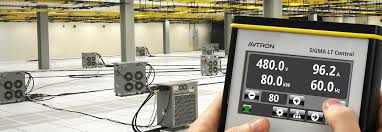
A load bank applies an artificial electrical load to generators, UPS systems, switchgear, and power distribution components. Instead of waiting for real IT equipment, load banks simulate the heat and electrical demand these systems will experience when the facility goes live.
Load Bank Testing Across Data Center Construction Phases
Phase 1: Early Power-Up & Infrastructure Verification
Before any advanced commissioning begins, load banks confirm that generators, UPS systems, switchgear, and protection devices function as designed. Early testing identifies installation or equipment issues when they are cheapest and fastest to correct.
Phase 2: Mechanical System Validation
Load banks produce heat, which is essential for validating CRAH/CRAC performance, airflow distribution, cooling tower staging, room pressurization, and thermal balance under simulated loads.
Phase 3: Redundancy & Emergency System Testing
Load bank testing validates N+1/N+2 redundancy, ATS operation, generator response, UPS ride-through capability, and recovery after utility loss—ensuring resilience during real-world events.
Phase 4: Integrated Systems Testing (IST)
During IST, load banks support full-system simulation, emergency power transitions, mechanical and electrical interaction testing, and thermal validation—ensuring the facility behaves as a unified resilient system.
Why Load Bank Testing Protects the Project
- Catches issues early, before they become schedule-critical
- Provides measurable, repeatable performance data
- Reduces risk during live deployment
- Ensures safety and regulatory compliance
- Improves GC, EC, and commissioning coordination
Karlan Capital’s Role in Load Bank Testing
Karlan Capital Consulting supports data center construction teams by coordinating competitive load bank solutions, temporary power setups, vendor logistics, and commissioning-aligned load profiles—reducing friction and ensuring technical accuracy at each phase.
Conclusion
Load bank testing is a strategic, phased process that underpins successful data center delivery. From early power-up to IST, load banks validate performance, uncover issues early, and ensure systems operate exactly as designed. In mission-critical construction, reliability is everything—and load bank testing makes reliability measurable.